DUI in Pinelllas County
Uncategorized

What happens if I am charged with a DUI in Pinellas County, Florida?

If you receive a DUI (Driving Under the Influence) ticket in Pinellas County, Florida, you could face serious legal consequences.

Firstly, if you are arrested for a DUI, you may be taken to jail and booked. You will then be required to appear in court to answer to the charges.

If you are found guilty of a DUI in Pinellas County, the penalties can include:

  1. Fines: You may be required to pay a fine ranging from $500 to $5,000, depending on the circumstances of your case.

  2. License Suspension: Your driver's license may be suspended for a period of time. The length of the suspension will depend on the specific circumstances of your case, such as whether it is a first or subsequent offense.

  3. Probation: You may be placed on probation for a period of time. This means that you will be required to comply with certain conditions, such as attending alcohol education classes or submitting to regular drug and alcohol testing.

  4. Community Service: You may be required to perform community service for a certain number of hours.

  5. Jail Time: You may be sentenced to serve time in jail, especially if it is a subsequent offense or if there are aggravating circumstances.

  6. Ignition Interlock Device: You may be required to install an ignition interlock device in your vehicle. This device measures your blood alcohol concentration (BAC) and prevents your vehicle from starting if it detects that your BAC is over a certain limit.

It is important to remember that the penalties for a DUI in Pinellas County can vary depending on the specific circumstances of your case. Therefore, if you have been charged with a DUI, it is important to consult with an experienced criminal defense attorney who can advise you on your legal options and help you build a strong defense.

Read More
DUI in Florida
Uncategorized

DUI in Florida

Information on DUI in Florida

Driving Under the Influence, DUI is an offense under Florida law.  The offense is proven by impairment of “normal faculties” or blood alchohol or breath alcohol level of .08 or above.  You hear the term DWI, driving under the influence, but in Florida driving while impaired is legally DUI.

Penalties for being charged with a DUI in Florida are based on the amount over the minimum .08 %, if there is a minor in the vehicle, number of previous convictions, if there is injury, or property damage.  Fines can range from $500 - $4,000.

For a first infraction the offender will serve a mandatory 50 hrs of community service.  However for a first offense the total period of probation and incarceration will not exceed on year.

Imprisonment is at the court’s discretion.  For a first conviction not more than 6 months unless the alcohol level is .15 % or higher or there was a minor in the vehicle.  Then the offender will not server more than 9 months.

Driver’s license suspension, revocation and reinstatement

On the first conviction your license can be suspended for 180 days up to one year.  During that time you can apply for a hardship license before the expiration of the revocation period.  DUI school completion or treatment for substance abuse may be required.

You can request reinstatement of your license after the revocation period with evidence of the treatment program and DUI school.  If you fail to complete the course or treatment within 90 days of the reinstatement it will result in the cancellation of your drivers license.

2nd, 3rd, 4th DUI convictions

Please visit the Florida Highway Safety and Motor Vehicle Website for more information on drivers’ license, DUI programs, and other frequently asked questions.

Do you need a lawyer if arrested for DUI in Florida?

Receiving a DYI conviction in Florida impacts more than just your driver’s license and pocket book.  Depending on the severity of the charges and number of times the conviction could be considered a misdemeanor or felony.  Regardless of the penalty the conviction will impact your ability to get car insurance or at the minimum raise the price of insurance.

The conviction goes on you record which is often checked for renting, buying a home, or when applying for a job.  With such long range potential impacts on your life engaging a lawyer up front to minimize the impact.

An experience criminal attorney can ensure you follow the court quidelines and time frames, and perhaps minimize the penalties.  The attorney can help apply for a hardship driver’s license and get it reistanted as soon as possible.

They can also work to help you get your record seal or expunged preventing issues with record checks later.  An experienced attorney can help you navigate the court and legal system.

Have questions?  

Call the Law Offices of Edward M. Panzica 24/7 at 727-588-0966 

Enter your text here...

Read More
Parental rights in Florida
Uncategorized

What you should know about Parental Rights in Florida

Couple placed in handcuffs while children removed from home

Knowing your parental rights can prevent potential issues with law enforcement.  A recent story on Apple News from Aurora, Colorado shows how bad things can happen with parental rights.  Loosing track of their child for a few minutes at a family picnic in a local park a passerby picked up the child and called the police.  The family got their child back but later a visit from the police and child services turn the experience into a nightmare.

This incident highlighted in the book "Torn Apart" by Dorothy Roberts talks about how the child welfare system destroys black families.  But it isn't just back family that need to understand their parental rights.  It is all of us parents in Florida.

If you're a parent—or you're about to become one—then it's essential that you know about your parental rights when it comes to the custody of the child. Whether you have a contentious relationship with the mother or father of your child, or you merely want to get informed on what's legal and what isn't when it comes to co-parenting, knowing your rights is a must. Florida is the 4th ranking state for divorce.


Parental rights in Florida are specific to the sunshine state. Things like custody agreements, child support payments, and the rights of individual parents may differ from those in other locations. To learn more about custody rights in Florida, read on now.


What to Know About Parental Rights in Florida


In a child custody case in Florida, the judge will always consider the child's best interests when deciding how the parents will share the time with their child. The child comes first in a custody case. The judge must base their decision first and foremost on what's best for the child.


You should know that Florida law does not give any preference to either mothers or fathers when deciding on matters of child custody. If you're involved in a custody case in Florida, you're not required to have a custody attorney. However, it's usually advised you get yourself one.


Can a Judge Terminate Parental Rights to Custody of the Child in Florida?


In Florida, there are several specific situations in which parental rights can be terminated. Rights can be terminated if and when a parent abandons their child. Under this scope, if the authorities can't locate a parent for over 60 days, they can have their rights terminated by the court.


If the parent of a child becomes incarcerated or if they threaten the wellbeing of the child, then their rights may also get taken away. If the child has been adjudicated as dependent and the parent isn't complying with the terms, rights may be terminated here also.


Another case that can result in the termination of parental rights can be terminated is when a parent executes a written surrender. In other words, the parent is willingly waiving their rights in this example. This most often comes as a result of an adoption.


The above circumstances notwithstanding, the state of Florida usually tries not to terminate the rights of either parent. This means that even if you're unmarried, you will have the right to see your child in all but a few extreme cases. Men will need to establish paternity before they're entitled to any rights, however.


Your Custody Attorney in Pinellas County, Florida


If you're looking for more information on parental rights in Florida, then it could be a good idea to hire the services of an experienced attorney with expertise in this area. In a contentious situation, the custody of the child isn't something you want to take any risks with.


Get in touch with the Law Offices of Edward M. Panzica today for expert advice on custody agreements and the laws on child custody in Florida.

Read More
Florida Breathalyzer test
Uncategorized

DUI Breath Tests

Take a DUI breath test or not in Florida?

Florida Residents Already Agreed to Take a DUI Breath Test

2021 Florida Statute (1)(a)1.a.

A person who accepts the privilege extended by the laws of this state of operating a motor vehicle within this state is, by operating such vehicle, deemed to have given his or her consent to submit to an approved chemical test or physical test including, but not limited to, an infrared light test of his or her breath for the purpose of determining the alcoholic content of his or her blood or breath if the person is lawfully arrested for any offense allegedly committed while the person was driving or was in actual physical control of a motor vehicle while under the influence of alcoholic beverages.

The chemical or physical breath test must be incidental to a lawful arrest and administered at the request of a law enforcement officer who has reasonable cause to believe such person was driving or was in actual physical control of the motor vehicle within this state while under the influence of alcoholic beverages.

The administration of a breath test does not preclude the administration of another type of test. The person shall be told that his or her failure to submit to any lawful test of his or her breath will result in the suspension of the person’s privilege to operate a motor vehicle for a period of 1 year for a first refusal, or for a period of 18 months if the driving privilege of such person has been previously suspended or if he or she has previously been fined under s. 327.35215 as a result of a refusal to submit to a test or tests required under this chapter or chapter 327, and shall also be told that if he or she refuses to submit to a lawful test of his or her breath and his or her driving privilege has been previously suspended or if he or she has previously been fined under s. 327.35215 for a prior refusal to submit to a lawful test of his or her breath, urine, or blood as required under this chapter or chapter 327, he or she commits a misdemeanor of the first degree, punishable as provided in s. 775.082 or s. 775.083, in addition to any other penalties provided by law.

The refusal to submit to a chemical or physical breath test upon the request of a law enforcement officer as provided in this section is admissible into evidence in any criminal proceeding.

(And yes the previous very long sentences were directly quoted from the Florida Statues)

Is there any defense for failing or refusing a breathalyzer test in Florida?

There is always a defense and there are logical reasons for refusing to take the test. In Florida the statutes are written specifically difficult to refuse and put you at risk for loss or suspension of your drivers license and more severe penalties if you do refuse.  

In every case there is the chance to repeal the suspension of loss of drivers license.  

If it is your first offense you are facing a possible 12 month suspension.  But you may be able to get a restrictive hardship permit after 90 day period.  If it is the second occurrence refusing to take the test the officer can charge you with a first degree misdemeanor.

There are technical defenses for refusing to take the test.  Every circumstance is different.  The best defense is to contact a experienced criminal attorney at the first opportunity.

For failing the test indicating that your blood alcohol level is above the legal limit there are also defenses.  Many of the defenses are related to breathalyzer machines and procedures.

Do you have questions about taking a recent breathalyzer test?

If you have been stopped recently and have questions don't wait to contact an experienced attorney.  

Call Edward M. Panzica 727-588-0966 today.


Read More
Florida Breathalyzer test
Uncategorized

Florida’s Traffic Violation Points System


How long do points stay on the driver's record in

Florida?

In Florida, the driver's license points for traffic violations stayed on your record for three years or 36 months.  Any additional violations resulting in points add to any points a driver already has on their record.

Each violation has a corresponding number of points assigned to it.  An example is, speeding adds three points to your record, while reckless driving adds 4. 

12 points in 12 months result in a 30-day suspension of your license.  24 points in 36 months result in a one-year suspension.  

Termination of driving privileges.

Your driver’s privileges can be terminated if you commit 15 violations or three major offenses in five years.  There are other reasons why your license can be revoked.  See the Official Driver License Handbook for additional information.

Minors have special rules on driver's license points in Florida.

Drivers under 18 years of age have their point system.  The points are the same, but if they receive more than six points in a year, their license is automatically restricted for one year!

During the day, they can continue to drive for business purposes only during the restriction.  Business purposes include work and school.

90 Days for each additional point?

Any additional points during the one-year period extend the restriction by 90 days per point! 

How can I keep points off of my driving record?

If you have received a traffic ticket, you have 30 days to respond to the court clerk in the county where you received the ticket.  

  1. You can pay the ticket and avoid points by pledging to take a driver's improvement course within that period.  You can take the course once every 12 months or five times in your lifetime.  If you elect to take the basic driver improvement course, you must pay an election fee to the clerk of the court.

  2. If you have too many points or have already taken the safe driving course, a second option is to go to court and fight the ticket.  This is a viable option for many reasons, since numerous variables involve the stop and ticketing for violations.  We recommend having a criminal attorney experienced in traffic violation defense represent you.

  3. You can pay for the ticket, admit guilt, and accept the associated points.

Your choice should be based on your records, finances, and car insurance.  Consult with a traffic violation attorney if you have any doubts about your rights.

The Florida Department of Highway Safety sponsors an Online Traffic School. There are several schools to pick from, but you can find another popular traffic school here.

They have a 4-hour basic course, an 8-hour judge-ordered intermediate driver improvement course, and a 12-hour advanced driver improvement course.  They also have a 4-hour traffic law and substance education course.

The 4-hour traffic law and substance abuse course. (TLSAE)

There are situations where drivers may have to comply with a court in order to meet the requirements to apply for a hardship license after a license suspension if drugs or alcohol were involved in the traffic violation.

Learn more about the TLSAE course here.

Mature Driver Program in Florida

For Florida, the state of mature drivers, there is a driver's safety course for seniors.  The course may help reduce your auto insurance rates and is applicable for 3 years.  Check with your auto insurance company first for the specific dollar amount of the rate reduction.

How can I get a suspended driver's license reinstated after a DUI?

Once you've been arrested for a DUI, you'll face challenges that can interfere with the reinstatement of your license in the Florida Court System and the Department of Motor Vehicles. 


It is likely that if you've been stopped and arrested for DUI in Florida, your license will be suspended before your case is taken on by a judge or prosecutor.  

Learn more about the ten-day rule for the driver's license reinstatement for DUI.

What should I do if I get a traffic ticket?  Do I need a lawyer?

Before you decide on your course of action, we suggest contacting an experienced traffic violation defense attorney.  We all worry about costs, but a free consultation doesn't cost a dime.

An attorney can navigate the courts and ensure you have the best outcome possible.  The Law Offices of Edward M. Pazica have been defending people for more than 25 years in Pinellas County, Florida.

Read More
Getting traffic ticket in Florida
Uncategorized

Traffic Violations in Florida

Do I need a lawyer for traffic violations in Florida?

If you are issued a traffic violation in Florida you have 30 days to make decisions on what to do.  After 30 days if you have not contacted the Clerk of Court to pay your fine, contest the violation or elect to take a driver improvement course you may be assessed additional fines along with the suspension of your driver's license.

Pay the fine

You have a choice to pay the civil penalty on the front of the citation to the Clerk of Court by visiting the clerk’s office in the county where the infraction took place.  In sixty-seven counties in Florida, you can visit the website www.payflclerk.com and pay the penalty.

In Florida payment of the penalty is considered a conviction and points will be assessed to your driver’s record. Points are not assessed until you pay the fine, fail in contesting the violation, or take the driver’s improvement course within 30 days.

Other traffic violations to take into consideration

For certain violations, you may have to show proof of compliance to the Clerk of Court such as

  • License expired less than 6 months 

  • Expired tags less than six months

  • Failure to display a valid driver’s license at the time of the violation

  • Failure to display a valid registration at the time of the violation

For some violations you are required to take a drivers improvement course:

  • Passing a stopped school bus

  • Racing

  • Reckless driving

  • Running a red light or other traffic control device

Points and Suspensions

Each traffic violation in Florida if convicted or admitted guilt carries points associated with the violation that goes on your driving record.  The points can add up to trouble, primarily the suspension of your driving privileges.  Increasing the cost of your car insurance is another problem that arises from having points on your record.

Here is a list of points for common violations taken from the www.flhsmv.gov

DESCRIPTION

POINTS

  • RECKLESS DRIVING

  • 4

  • CRASH - Leaving scene without giving information more than $50 damage 

  • 6

  • CRASH - Fail to leave information UNATTENDED vehicle - property damage

  • 6

  • CARELESS DRIVING

  • 3

  • SPEEDING

  • 3

  • Violation of 316.183(2), 316.187, or 316.189, Speed in excess of 50 MPH

  • 4

  • TOO fast for conditions

  • 3

  • Passing on enter/exit side while the bus is stopped [See 318.19(3) Mandatory Hearing Required]

  • 4

  • SCHOOL BUS - failure to stop for (school election available to have adjudication withheld)

  • 4

  • Fail to stop at a STEADY RED signal, one-way street, before making left turn

  • 4

  • Fail to obey traffic control signal (Failed to stop at traffic signal/red light)

  • 4

  • Fail to stop at STEADY RED signal

  • 3

  • Failed to yield the right-of-way to pedestrian

  • 3

  • TRAFFIC CONTROL DEVICE Fail to obey traffic control device (sign)

  • 3

  • FAILED TO YIELD

  • 3

  • BACKING - improper

  • 3

  • CHILD RESTRAINT - Infant thru 3 years MUST be in a SEPARATE carrier, 4-5 years in carrier/seat belt. Applies to ANY location in the vehicle (Driver to be cited)

  • 3

  • Child Restraint required

  • 3

Why be concerned over points on your driving record?

Points stay on your driving record for at least 5 years!  Too many points on your record in a specified period of time can result in a suspension of your driving privileges. Times are from when the first violation occurred.

POINTS

SUSPENSION

  • 12 points within 12 months

  • 30-day suspension

  • 18 points within 18 months

  • Three-month suspension

  • 24 points within 36 months

  • One-year suspension

Options to keep points off your record?

too many points will raise the cost of your auto insurance

For some violations or first violations attending a driver’s school sponsored by the state online or in-person can prevent points from going onto your Florida driving record.

The best defense is a good offense in most cases.  An experienced traffic court attorney can prevent or minimize the damage of additive points on your record.  Each violation should be taken seriously and contacting an attorney to help you through the court process will save money and hardship in the long run.

Call Law Offices of Edward M. Panzica - 727-588-0966

Read More
termination of parental rights
Uncategorized

Termination of Parental Rights

Termination of Parental Rights in Florida

The prospect of losing access to your child is a terrifying one, but it is the reality for dozens of parents across Pinellas County when an allegation of abuse is registered. Even if the allegation proves to be unfounded, it's vital to be aware of your rights and the process involved so that you have all the information you need to make the right decisions for you and your child. 

Detailed below is information on dependency proceedings, as well as an explanation of your parental rights as they relate to dependency law.

What is Dependency law and what is the process?

Dependency law is a body of legislation that relates to the rights of children and parents when allegations of abuse have been received by the DCF. If DCF believes your child to be at immediate risk, they can remove them from your home. 

Within 24-hours, DCF is required to present evidence as to why the child should remain outside the home to the court, at a Shelter hearing. If the judge agrees the child should remain away from home, the next step in the process is an Arraignment hearing.

At the Arraignment hearing, the parent may either admit the allegations, deny all the allegations and request an adjudication, or agree to a case plan, without an admission of guilt. Each of these courses of action has pros and cons - your legal advisor should provide you with the information you need to decide which option is going to be best.

How are Your Parental Rights Affected by Dependency Proceedings?

The state believes that, where possible, children should be raised by their parents. Where this isn't possible because parents aren't capable of providing a safe, nurturing environment for their child, the state will seek long-term, or permanent removal of the child, with a consequent diminution, and possibly termination, of parental rights.

If Dependency proceedings don't have a successful outcome, or if serious allegations are proven, a Termination of Parental Rights hearing (TPR hearing) will be scheduled. At the hearing, the judge will hear evidence from DCF, the parents' legal representative, and a number of professional witnesses. They will then decide whether to terminate parental rights. If this happens, the child will be permanently fostered or adopted.

In most cases, a TPR hearing is scheduled when parents haven't stuck to the case plan agreed during the Arraignment hearing.

Although the state emphasizes its commitment to keeping families together, this is often little reassurance to parents who are going through Dependency proceedings or facing a TPR hearing. 

What type of attorney do I need to represent me?

If you're experiencing these issues and are based in Pinellas County, FL, we strongly recommend seeking expert legal counsel to maximize the chances of getting the outcome you're aiming for. Edward Panzica is an experienced criminal attorney that specializes in Parental Rights and Dependency law in Largo, Clearwater, and Safety Harbor.

Law Offices of Edward M. Panzica provides seasoned legal assistance at all stages of Dependency proceedings. We favor a robust approach and are 100% committed to obtaining the best outcomes possible for every client. Get in touch to arrange an initial appointment.

Read More
child being handcuffed for baker act in Florida
Uncategorized

Florida Schools Can Baker Act Your Child

How can the school Baker Act my child?

Those of us that live in Florida wait patiently all summer for the weather to turn and provide the perfect day. It is 70 degrees, sunny skies, and the high for the day only 75. These days arrive a few months after school started but are worth the wait.  In the morning when you drop your young kids off at school, they may need a light jacket in addition to the traditional backpack, but it is all good. Your hurry on to work or back home feeling a little bit lighter knowing the weather is good and your child is in good hands.

When the call comes from the school you are naturally a little worried. Is your child sick or injured? The principal soberly tells you that the child posed a threat of substantial harm to themselves and others. The school resource officer has taken them the Baker Act receiving facilities.  You can’t believe what you are hearing. How could a 6-year-old be a substantial threat to themselves or anyone else? What did they do to constitute such a threat and what do you mean Baker Act? You thought that was for mentally ill people.

Your child ignored the teacher’s repeated requests to sit down and stop disrupting the class. It seems he felt that he left something at home he needed for school and was determined to leave school to get it. When she attempted to stop him, he pulled away from her and ignored her warnings about leaving school. The school’s resource officer saw him running down the hall and also tried to stop him. He ignored him also and would even acknowledge their repeated requests to stop.

When your child became more and more upset and struggled to get away the resource officer had to hold Jason down and handcuff him. When he continued to struggle the officer took him into custody. They will hold him for involuntary psychiatric evaluation.  You respond with a few descriptive words for the teacher, principal, and resource officer ending with they are the ones that need a mental health professional. How can you do this? He is a child that suffers from Asperger Syndrome.

The principal tells you they have a right to act if there is a present threat of substantial harm to the student or other children. In this case, it was the resource officer’s opinion that the threat existed, and he is authorized to initiate the Baker Act on kids. Imagine your surprise when the Principal tells you they didn’t have to call! You could have shown up to school only to find my child missing!

This story is fictitious but was related to me by one of my friends (not a client) that asked me what could be done if this happened to their child that has Asperger’s Syndrome, part of the autistic spectrum? The child is high functioning but has difficulty relating to others and can focus on one issue intently without regard to the circumstances. In this case the lunch box he forgot at home.

Children with Asperger’s also can’t understand non-verbal communications. Even if the teacher and resource officer show frustration and yelled at him the child would associate that as different from any other communications. He would only focus on that fact he forgets his lunch box at home.

Real Stories of Kids Baker Act in Florida

Real Stories of Florida Backer Act on Kids

The real stories of children sent to a mental health facility from Florida public schools are frightening. Perhaps the recent school shootings have alarmed school officials to an error on the side of caution but the number of children involved should be alarming to parents.  Across Florida 36,000 children fell under the Baker Act in 2017-2018 according to the University of South Florida Backer Act Reporting Center.

The Times reportedly analyzed 365 police reports that describe Baker Act commitments in schools across Tampa Bay. They state that in more than two-thirds of those cases the officers did not talk to parents until after they decided to use the Baker Act and send the child to the hospital. The officer and school officials are afraid the parents will show up at the school angry. REALLY?

The series of articles continues to describe how things can go terribly wrong after a child arrives for processing at the mental health facility. Under the law, the facility can hold your child for 72 hours

Do You Have an Autistic Child in a Florida School?

If your child suffers from any of the challenges along the autistic spectrum of disorders, you have already dealt with difficult situations.   Many of these children are high functioning or at least able to attend public or private schools with other kids. Even if they don’t, have autistic spectrum issues, kids are kids and suffer a lot of growing pains. Many of these growing pains could end up being mental health issues by teachers and resource officers. 

Most of the school district personnel are not trained as mental health professionals and aren’t equipped to understand or respond to behaviors that are outside the norm. Or maybe they just don’t want to take the time or have the patience to deal with the child’s behavior.

Right or wrong parents and protective children’s groups have forced capital punishment from the schools. Most school officials are afraid of liability for any type of disciplinary action they might want to take to keep a student in line.

Gone are the days when I was sent to the principal’s office with the threat of paddling with a wooden paddle containing holes that enabled it to be swung faster before it struck my bottom. Just seeing the paddle was enough to get me back in line. Nor can a teacher stand you in the corner on your knees holding a book over my head. Or placed in dark clothes closet until the end of class. I can’t even remember what I did wrong!

Perhaps the Baker Act is the relief valve we have forced school administrators to use.  If an autistic or any other child has a meltdown at school the family of the child can suffer the consequences.

The Rate of Pinellas County Children Affected Has Risen Dramatically.

According to a recent Tampa Bay Times article, the rate of children being Baker Acted has risen more than 75% in Pinellas, Pasco, and Hernando counties in the past 5 years.  

The Tampa Bay Times has run a series of articles this week on the Baker Act and Kids. If your child has development issues or is just a kid growing up read all the articles. If your child has special needs you may want to speak to their teacher, principal, and even the resource officer. Really concerned? Talk to a lawyer that specializes in child custody and similar issues

Are the Mental Health Facilities Cashing In?

According to the Tampa Bay Times, some mental health hospitals are cashing in. The article estimates that one extra day in the hospital beyond the 72-hour period could add $1.4 million dollars in revenue to just one hospital whose records were examined. These numbers include adults but image if the same tactics used to keep adults’ extra days how that might affect your child.

When hospitals can charge $1,500 to $2,000 a day for a stay the bill will add up for the individual’s family or the insurance company. That is a lot of incentive to create reasons why your child needs to stay longer.

Custody Issues and the Baker Act?

Your child being Baker Acted could also result in custody issues. These issues could add a new level of complexity that you may not be prepared to manage. If you have had custody issues or are at risk for custody issues be especially concerned about the fallout of the Baker Act if used on your child.

Dependency and parental rights often come into play after the Baker Act is initiated. Imagine if someone calls the Florida Abuse Hotline claiming potential child abuse on your part.

Dependency law, codified under Florida Statutes Chapter 39, is the governing law that is triggered when Child Protective Services make allegations that a child or children are in danger of being abused, abandoned or neglected.

Under Florida law, any report of potential child abuse or neglect that is made to a law enforcement agency, or to the Florida Child Abuse Hotline is required to be investigated within 24 hours of the triggering report.

Baker Act is not directly associated with Dependency and Parental rights but what if someone does report it as if your conduct as a parent contributed to the child’s actions at school?

Contact us at the Law Offices of Edward M. Panzica in Largo, Florida if you feel there might be issues with your child or if your child has been taken into custody under Florida’s Baker Act.  Call 727-588-0966


Read More
sealing criminal records in Florida
Uncategorized

Sealing & Expunging Records In Florida

Questions about criminal or felony records in Florida

  • How long does a felony stay on your record in Florida?
  • Can I remove an eviction from my record?
  • What is the best way to get an arrest expunged?
  • How can I clean up my criminal record so I can get a job?
  • Can I hide my criminal record to purchase a gun?
  • Are criminal records ever truly expunged?
  • Can I get a record expunged from a different country?
  • Can I get my records expunged from a different state?
  • Do I need a lawyer to petition the court?
  • Is there a local attorney that specializes in sealing and expunged records?
  • What is the difference between sealed and expunged records?
  • How long does it take to get a record sealed or expunged in Florida

What is sealing  a record in Florida?

Record sealing is the practice of sealing or destroying court records that would otherwise be publicly accessible as public records. The term is derived from the tradition of placing a seal on specified files or documents that prevents anyone from reviewing the files without a court order according to Wikipedia.

The distinction on record sealing is that the record is not available to the public but may be available to law enforcement or through a court order. A sealed record will not show up on typical background checks for employment. The exceptions are certain state or legal entities such as the Department of Children and Family Services, or the Department of Education.

The requirements for sealing records are less stringent than the expunging or destroying of records. Sealing is often used for juvenile records, witness protection, trade secrets, and state secrets. Records of eviction may be sealed easier than they can be expunged making it easier to rent a new property.

What is expunging a record in Florida?

Expungement is the physical destruction or complete erasure of a criminal record and can be more complicated to obtain. There is no legal or physical record of a criminal offense when the record is expunged.

With expungement on can state under oath that they have never been convicted before according to Wikipedia!

Section 943.0585 of Florida Statutes outlines requirements for court-ordered expunction of criminal records and eligibility.  It is complicated. If in doubt as to whether you should contact a lawyer that specializes in sealing and expunging this should erase the doubt.  

The process for sealing and expunging is complicated and can take several months to a year or more to get through the system. It is necessary to first get a Certificate of Eligibility to petition for relief to the court that has jurisdiction over the arrest. This is only the first step and no guarantee that a criminal history record will be sealed or expunged.

Even after the court-ordered sealing or expungement the arresting agency or prosecutor can petition for the expungement to be voided. An experienced attorney will follow the case through the process to ensure that the records are eventually sealed or expunged. The original records could exist in numerous places and it will take time to track those records down and follow the court’s directions.

What criminal offenses cannot be sealed or expunged?

The offenses are too long to list here. Seek legal advice to be sure. There are always circumstances that may or may not create an exception. Arrest records but not convicted of the crime is the reason for sealing and expunging. Once convicted or having multiple convictions makes it extremely difficult for Florida expunging.

Here are some offenses that won’t qualify for sealing or expunging. 

Crimes of sexual nature and involving violence cannot be sealed or expunged in Florida.

  • Drug trafficking
  • Carjacking
  • Sexual Battery
  • Kidnapping
  • Arson
  • Robbery
  • Human Trafficking


This article is not meant to be exclusive and answer all the questions concerning sealing and expunging criminal records in Florida. It is complicated. The following link includes additional

frequently asked questions. The positive result of a quest for sealing and expunging records in Florida is too important for a do-it-yourself approach. One mistake can result in very negative consequences. Contact Edward Panzica, an experienced criminal defense attorney, to help you sort out the complicated process and reach a positive outcome.

The Florida Department of Law Enforcement has a web page with frequently asked questions about the seal and expunge process.

Contact use directly if you have questions at 727-588-0966

Read More
Stopped for DUI
Uncategorized

Pinellas County DUI Defense

Do I Need a Lawyer for a DUI Offense In Pinellas County, Fl?

Have you ever looked in your rearview mirror and seen a local or state police car's flashing lights behind you? It sends chills down your back if you are like me, and sweat breaks out on your forehead. Even if you aren't aware that you have done anything wrong, it is a sinking feeling that you are the one.

If you have been drinking, it is worse. Now you know that you have a serious problem and are not sure what your rights might be when you roll down the driver's window.

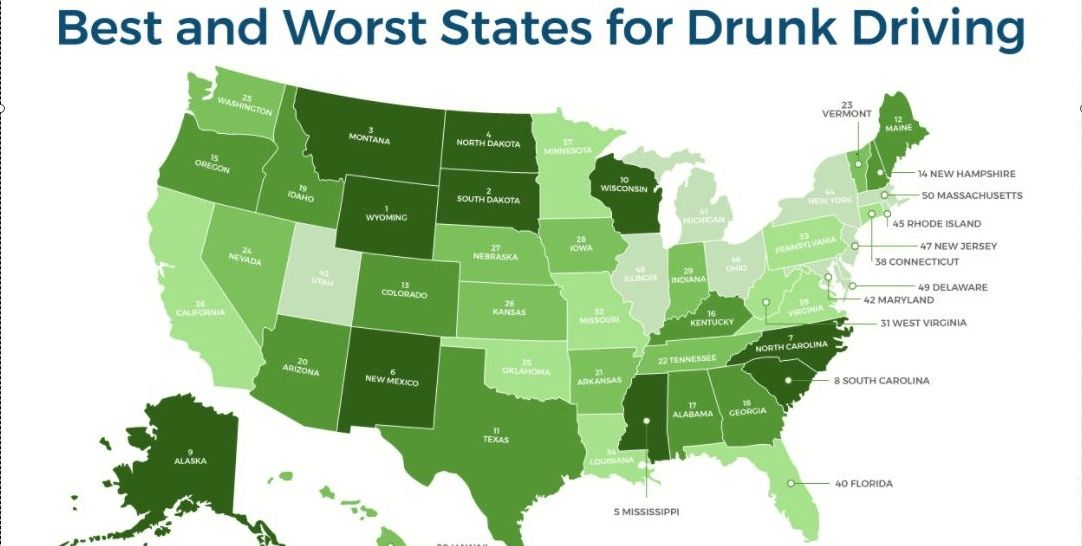
Which state has the most DUI arrests?

Florida ranks 40th on the lists for the number of DUI cases!  

Maybe this is due to the severity of penalties for DUI in Florida, or we have enough sense to stay home or call Uber when drinking?   

These statistics are from background checks.org.


Do you need to call an attorney in the State of Florida for DUI arrest?

There are several reasons why you should call an attorney. DUI/DWI is a serious offense. Worse if it resulted in an accident.  

You only have ten days from the date of arrest to apply for a hardship license and work permit. It is essential to avoid adversely impacting your job/income as a result of a suspended license.  

With COVID, courts backlogged, you don't want to get penalized for not taking the appropriate steps in requesting the hearing. Having your license suspended for 6-18 months, maybe longer with COVID, could be disastrous to your financial situation.

In the State of Florida, a conviction of a DUI will remain on your record for 75 years. The National Highway and Safety Administration annual Traffic Safety Fact stated that 1 out of every 135 people would be arrested for driving under the influence each year.

Questions best discussed with an experienced criminal defense lawyer.

  • Were you asked to perform sobriety tests?
  • Were you put into handcuffs?
  • Were you read "implied consents"?
  • Was your license suspended or revoked for not taking the breath test?
  • Were you given a bond after booking?

Questions an experienced criminal defense lawyer should ask you.

  • Where and when were you stopped, by what agency?
  • Were the roadside sobriety tests taped?
  • Did the arresting officer perform a gaze nystagmus test?
  • Did you blow into the breath analyzer?
  • If you did, what were the results?
  • Do you have a prior DUI? Is it in Florida?
  • What is the status of your license?
  • Are there other charges besides the DUI, including infractions?
  • Were you given a court date, or do you have to set one yourself?

If the lawyer you called doesn't ask these questions?

Hang up and call us  

This information is key to a successful defense. In Florida, if the lawyer doesn't ask you these questions, hang up and get another one, because the information is the key to a successful defense. It is never too early to plot a strategy for a successful defense.

Get an experienced attorney.

Edward M. Panzica has been serving Largo and Pinellas County, Florida, for 30 years. 

Call his office today for assistance. 727-588-0966.

Your future could depend on making the right decision.


Read More